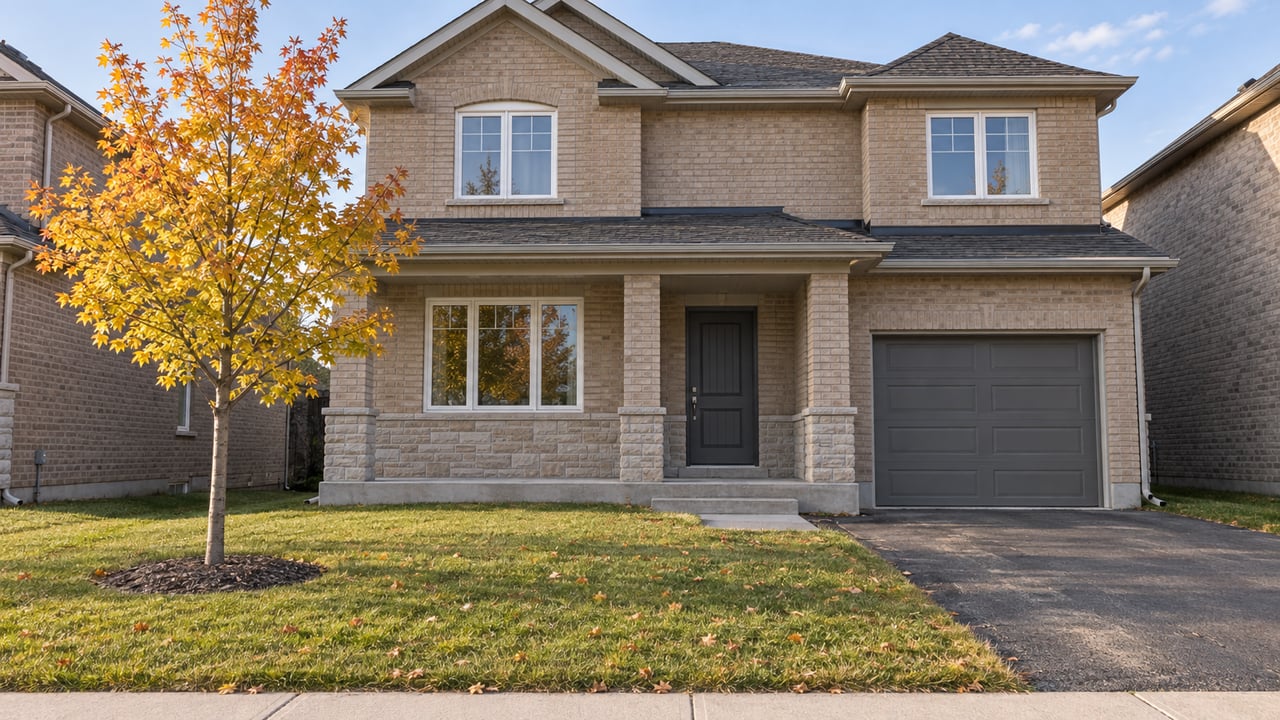
Why Highland West Is on Kitchener's Short List for New Trees This Year
Each year the City of Kitchener picks a small number of neighborhoods for focused tree planting through its Community Canopy program. For 2026 it picked two, Cherry Hill and Highland West. Across the two neighborhoods combined, the City has committed to planting at least 100 trees on public land and 50 on private property.
The program targets the parts of Kitchener with the least tree canopy, and Highland West may seem like an odd choice. It has no industrial core and no stretch of parking lots. Most of its homes went up in the 1990s and early 2000s, and that is the reason it is on the list. Highland West is short on shade mostly because its trees haven't had time to grow. City forestry staff estimate that a young tree takes 5 to 10 years to add meaningful canopy, so trees planted this fall will shape the neighborhood's shade around the end of this decade.
The City scores every neighborhood on its Community Canopy page and lists the reasons a score can come out low. Some areas never had enough trees planted, some have lost trees, some property types have little room for planting, and some "have been developed more recently."
The last reason applies to Highland West. A Tree Canopy Update report by the City's forestry staff, which went to council committee on January 26, 2026, explains how a recently built area falls behind in canopy:
"Young trees require 5-10 years before their canopy meaningfully contributes to overall coverage, making early and consistent replanting essential."
The same report says that young trees in new developments or re-plantings "have not yet contributed significantly to canopy cover." It names this as one of the reasons canopy varies across the city. A boulevard tree planted when a street was first built may look established at street level. Seen from above, which is how the City measures canopy, it may still cover only a small part of the lot.
This also explains why the City's planting list includes a neighborhood with plenty of grass and gardens. The trees exist, but most are still too small to show up in the measurements.
Highland West was chosen against a citywide trend. Kitchener's canopy cover rose from 25% in 2014 to 27% in 2019, then fell to 26% in the 2025 assessment. The City measures canopy every five years because coverage varies from year to year, so the 2025 figure is the current baseline.
The report lists what caused the decline since 2019:
According to staff, existing trees kept growing, but "these gains were not sufficient to compensate for the tree losses incurred since 2019." In other words, the city loses large mature trees faster than small young trees can replace them. That makes a neighborhood whose trees are mostly young more valuable to the canopy goals over time.
Those goals are set out in Kitchener's urban forest strategy: 30% canopy cover in every ward by 2050 and 33% citywide by 2070. In 2025, ward-level cover ranged from 36% in Ward 4 down to 17% in Ward 5, and five wards were below the 26% citywide average. The report also says no ward gained enough canopy over the last five years to post an overall increase. Reaching 30% in every ward depends on neighborhoods like Highland West, where the trees are young and there is still room to plant.
Two separate programs and the City's ordinary request process are all adding trees right now. The table shows how each one works.
| Route | Who plants it | Where it goes | What a resident does |
|---|---|---|---|
| Community Canopy, public land | City of Kitchener | Sites the City selects, which could include parks, community centres, boulevards and other City property | Nothing required; potential planting points are on the City's Urban Forest Map |
| Community Canopy, private land | Reep Green Solutions, funded by the City | A homeowner's yard, after an arborist visit | Apply through Reep; Kitchener spots are full for 2026, so new applicants join a waitlist |
| Public tree request | City of Kitchener | A spot the resident suggests, such as a boulevard | Submit the City's online tree request form or call 519-741-2345 |
All of this runs alongside a much larger citywide effort. Under its Growing Kitchener's Urban Canopy project, the City planted 1,400 large boulevard trees in 2025 and planned another 3,000 for 2026. The City's tree planting and maintenance page describes the whole project as nearly 20,000 trees planted in neighborhoods, parks and natural spaces across 2025 and 2026. Some of the new young trees you see on Highland West boulevards may come from that project rather than from Community Canopy.
The City's figures for private trees don't fully agree. Its planting summary says 50 trees on private property. A few lines later, the same page says Reep will plant 70 private-property trees and that up to 70 households in the target neighborhoods will each get a first tree free. The page doesn't explain the difference. Either way, the spots are shared between Highland West and Cherry Hill.
Reep Green Solutions runs the private-property side of Community Canopy. For eligible households, the free package includes:
Reep chooses from a list of native species. It includes white pine, white spruce, basswood, bur oak, Freeman maple, sugar maple, honey locust, paper birch, ironwood, hackberry, red oak, Kentucky coffeetree and tulip tree. Several of these, bur oak and sugar maple among them, grow into large shade trees. On a lot where the backyard tree is still young, the species picked now decides how much shade the yard has 10 years from now.
Extra trees beyond the free one cost $160 to $230 each plus tax. Reep's eligible list for Kitchener includes Highland West along with Alpine, Forest Hill, Laurentian Hills, Southdale, Victoria Hills and others. It also says Kitchener applications are full for 2026 and directs new applicants to a waitlist. Reep plants in fall during September, October and November, so trees already booked this year may still be going in through the end of November.
Reep has been planting trees on private property with Kitchener for a while. The City's report says more than 820 subsidized trees have gone in since 2019, and that Community Canopy has offered a free first tree in low-canopy neighborhoods since 2024.
The most visible part of the program so far happened at Lynnvalley Park, 20 Lynnvalley Cres. On Saturday, October 17, the City's Forestry and Natural Areas team held a free volunteer planting there with Sustainable Waterloo Region, aimed at the Highland West Community Canopy Zone. The City has held two or three volunteer plantings a year since 2023 with Sustainable Waterloo Region and Trees Canada, all in parks and public spaces. The City lists upcoming dates on its Kitchener Natural Areas Program page.
Once trees are in the ground, the City maintains them. Its block pruning program has maintained more than 7,500 trees a year since 2024, about one-tenth of its inventoried trees each year. The report credits sustained maintenance funding with protecting the City's return on mature trees.
The City measures canopy on a five-year cycle, and the last assessment was in 2025. If that cycle holds, the next one would fall around 2030. By staff's own 5 to 10 year estimate, trees planted at Lynnvalley Park and in Highland West yards this fall will only begin to show up in that measurement then. To see where the City has marked possible planting points near your street, use the Urban Forest Map. With Kitchener's 2026 backyard spots full, Reep is directing new applicants to its waitlist.
Where a tree goes on a lot matters as much as the species. Its distance from the foundation, from the driveway and from where the roots will spread decides whether it adds value or causes upkeep 20 years later. If you're thinking about how a new tree, an old one or a planned yard project fits with your home and lot, the Gascho Group can walk through it with you. You can learn more about the area on our Highland West neighborhood page. Make Your Next Move With Confidence.
Whether you are buying a luxury home, selling an acreage property, relocating within Ontario, or exploring your next investment, I will help you understand the opportunity and make informed decisions at every stage. My approach is personal, strategic, and grounded in honest communication—from our first conversation through negotiation, closing, and beyond. If real estate is part of your next chapter, I would welcome the opportunity to learn what matters most to you and create a plan around it.
Let’s Talk Kitchener-Waterloo Real Estate
THE GASCHO GROUP
REAL BROKER ONTARIO LTD., BROKERAGE
(519) 573 7440
[email protected]
ADDRESS
279 QUEEN ST S
KITCHENER ON, N2G 1W4